EYFS
Curriculum Intent
At Victoria Primary Academy we aim to provide the highest quality care and education for all our children in their first year of school, thereby giving them a strong foundation for their future learning. We create a safe and happy environment with motivating and enjoyable learning experiences that enable children to become confident and independent.
We value the individual child and work alongside parents and others to meet their needs and help every child to reach their full potential. We aim to provide a broad and balanced curriculum which will enable each child to develop personally, socially, emotionally, spiritually, physically, creatively and intellectually to his/her full potential. Each child is valued as an individual and teaching and learning is based on the understanding that children develop at different rates.
Curriculum Aims
At Victoria Primary Academy:
- Provide a safe, challenging, stimulating, caring and sharing environment which is sensitive to the needs of the child, including children with additional needs.
- Provide a broad, balanced, relevant and creative curriculum that will set in place firm foundations for future learning and development in Key Stage 1 and beyond.
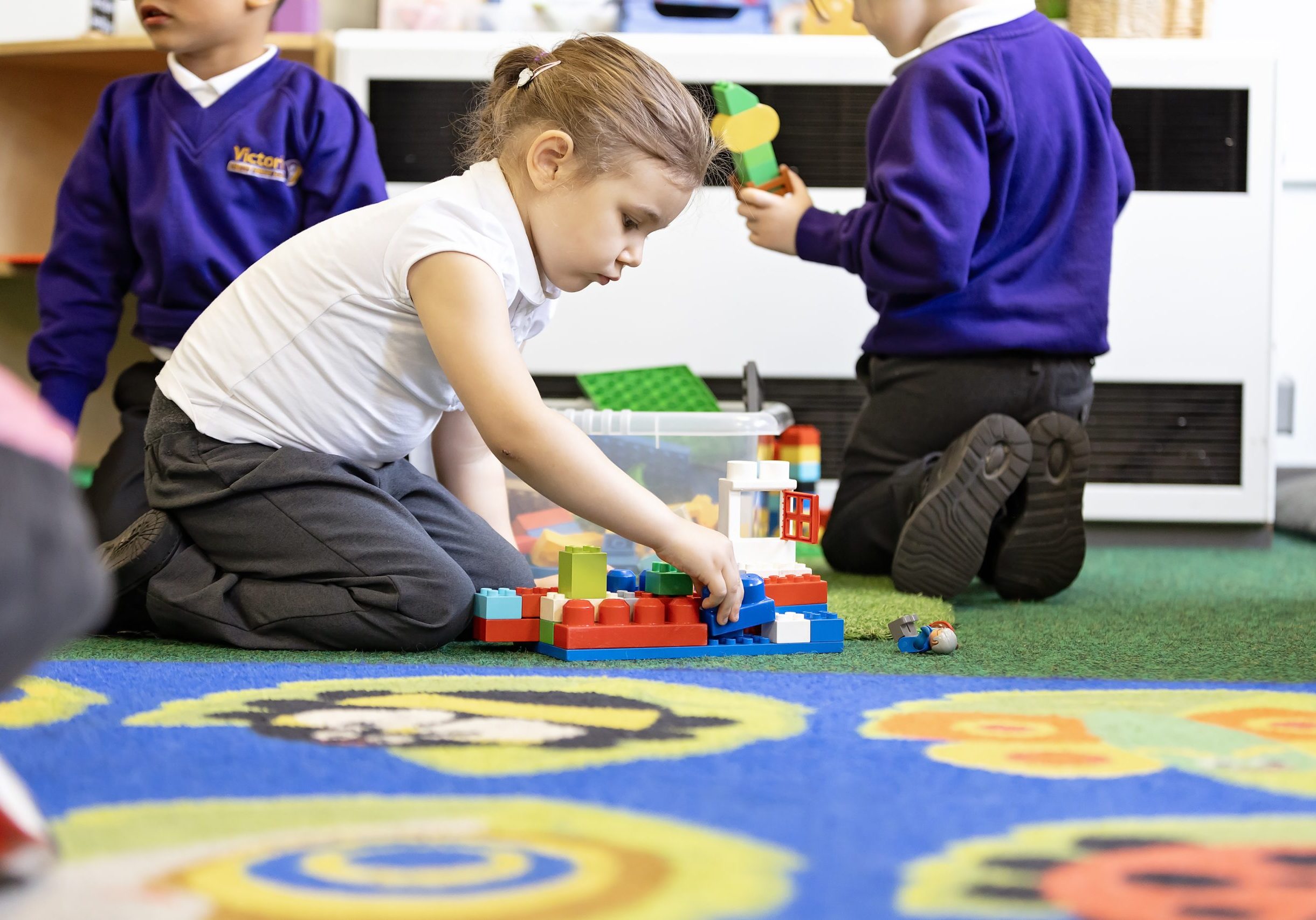
- Provide opportunities for children to learn through planned, purposeful play in all areas of learning and development.
- Use and value what each child can do, assessing their individual needs and helping each child to progress.
- Enable choice and decision-making, fostering independence and self-confidence.
- Work in partnership with parents/guardians and value their contributions ensuring that all children, irrespective of ethnicity, culture, religion, home language, family background, learning difficulties, disabilities, gender or ability receive the best possible start to their primary education.
- Provide opportunities for children to experience a challenging and enjoyable programme of learning and development.
- Provide experiences for all children, whatever their needs, which are inclusive rather than parallel.
Long Term Curriculum Plan
Our long-term curriculum plan is carefully designed to ensure children have opportunities to experience and develop all the skills outlined in the EYFS framework and skills and experiences that we have identified as being key for our children. Our long-term curriculum plan builds learning progressively throughout the year, helping children strengthen key skills and deepen their understanding as they grow. We recognise that every child develops at their own pace. While some areas of learning are revisited regularly throughout the year, we continually adapt our planning to meet the needs and interests of the children in our class. For children who are ready for additional challenge, we provide opportunities to extend their learning.
First Hand Learning Experiences
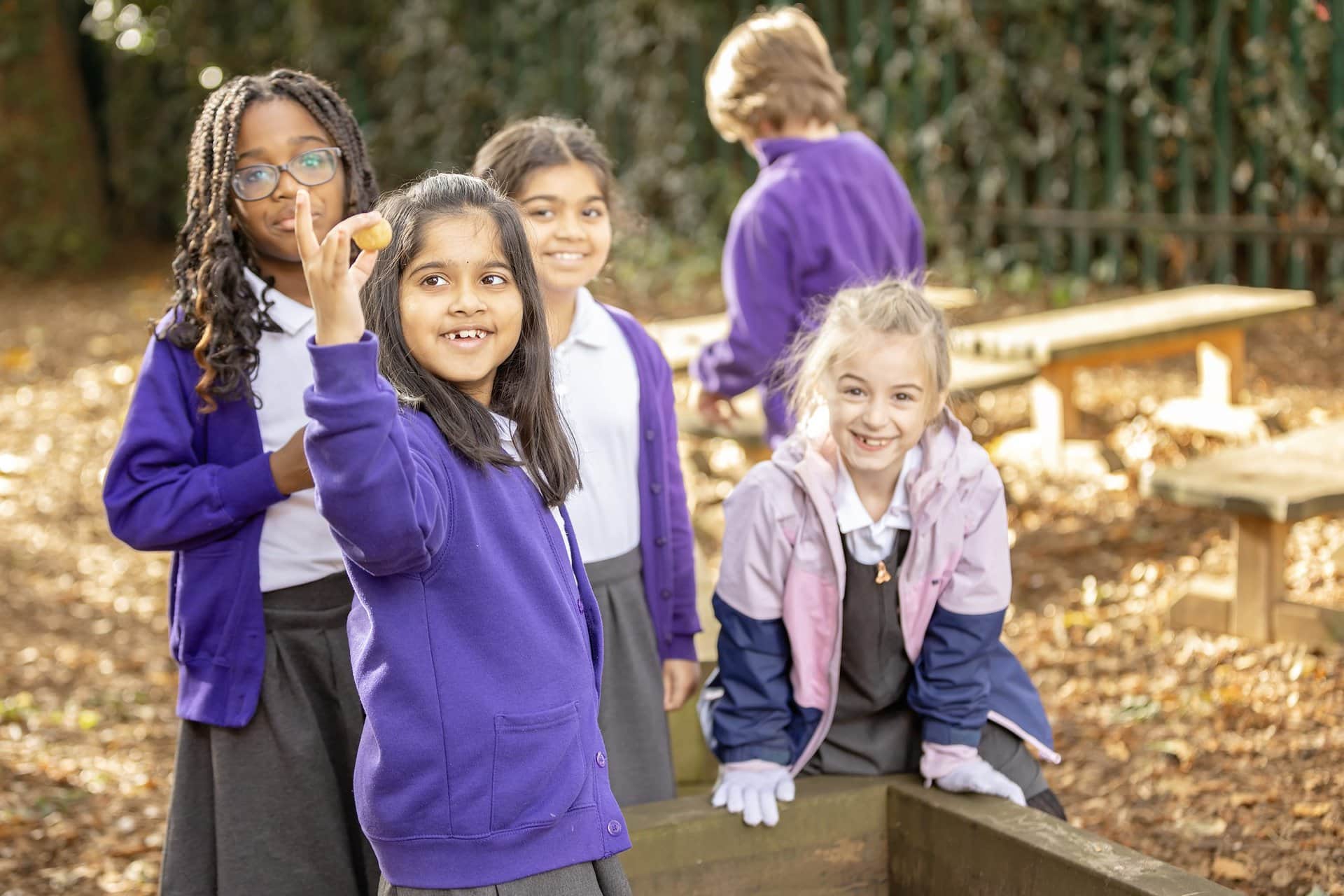
We believe that children learn best when they can explore, experience, and engage with the world around them. Wherever possible, we provide children with a wide range of first-hand learning experiences through visits, school visitors, and special events that bring learning to life. Visits are not always possible, so we use our imagination and creativity to create immersive learning experiences within the classroom. For example, during art week, a visit to an art gallery may not be possible, so we aim to create the context and a role play experience as best as we can in school. This allows children to explore new concepts, develop their language skills, and learn through meaningful play.
By combining real-life experiences with imaginative, hands-on learning opportunities, we aim to spark children's curiosity, deepen their understanding, and create exciting memories that make learning both enjoyable and memorable.
Continuous Provision and Enhanced Provision
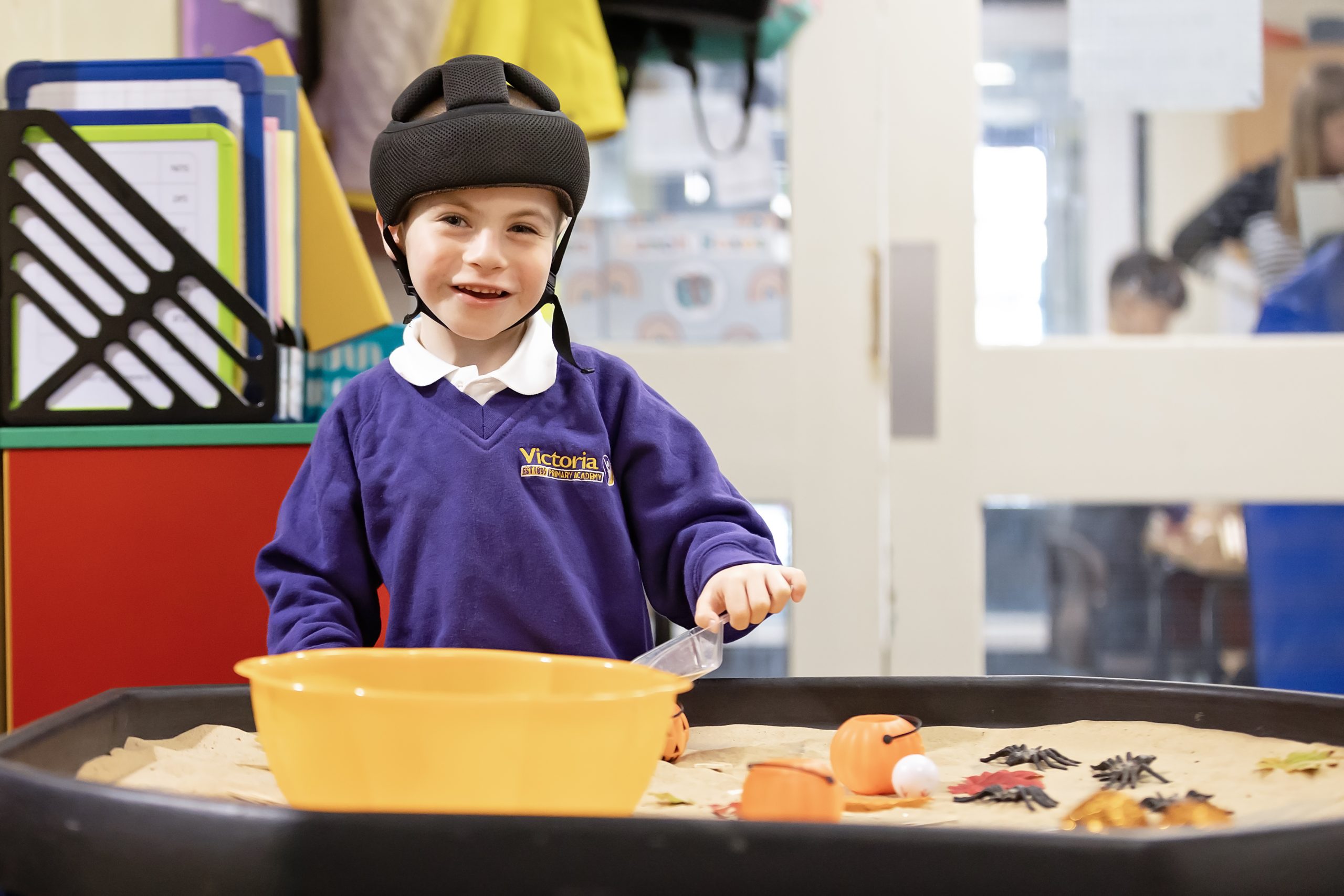
In Reception, children learn through a balance of adult directed tasks and a carefully planned range of continuous provision areas (both indoors and outdoors). These areas are available every day, allowing children to choose resources, explore their interests, and develop their learning through play.
Our learning environments are thoughtfully planned to support children's development across all areas of the EYFS curriculum. We regularly enhance these areas with new activities, resources, and challenges that link to current learning, children's interests, and their individual developmental needs. This ensures that every child is engaged, motivated, able to build on what they already know and can do and, work towards their next steps in all of the curriculum areas.
Use of specific schemes withing the EYFS Curriculum
Phonics – Read Write Inc
At Victoria, we teach phonics using the Read Write Inc. programme, helping children build the skills and confidence they need to become successful readers and writers. Children take part in daily phonics lessons in Reception, where they learn to recognise sounds, blend them together to read words, and develop their early writing skills in a fun and engaging way.
Throughout the year, we also invite parents and carers into school to join a phonics lesson. These sessions provide a valuable opportunity to see how phonics is taught and to learn simple, practical ways to support your child's reading journey at home.
Each week, your child will bring home a carefully matched reading book that is appropriate for their current reading level. Sharing these books together at home helps to reinforce learning, build fluency, and, most importantly, foster a lifelong love of reading.

Gross and Fine Motor Skills - Dough Disco and Squiggle Whilst you Wriggle
In Reception, we use Dough Disco and Squiggle Whilst You Wriggle to help children develop the important physical skills needed for writing.
Dough Disco uses fun, music-based activities with playdough to strengthen the muscles in children's hands and fingers. These activities help improve grip strength, finger control, and hand coordination, making it easier for children to hold and use a pencil comfortably and confidently.
Squiggle Whilst You Wriggle combines movement, music, and mark-making to develop children's large and small muscle groups. Children practise making a variety of patterns and movements that help build shoulder stability, arm strength, coordination, and control, all of which are essential foundations for successful handwriting.
By taking part in these enjoyable daily activities, children develop both their gross motor skills (large body movements) and fine motor skills (small, precise movements). This helps them gain confidence, improve their pencil control, and become ready for the next steps in their writing journey. Most importantly, these sessions are fun, engaging, and active, helping children develop key skills through play while fostering a positive attitude towards writing and learning.


Handwriting – Kinetic Letters
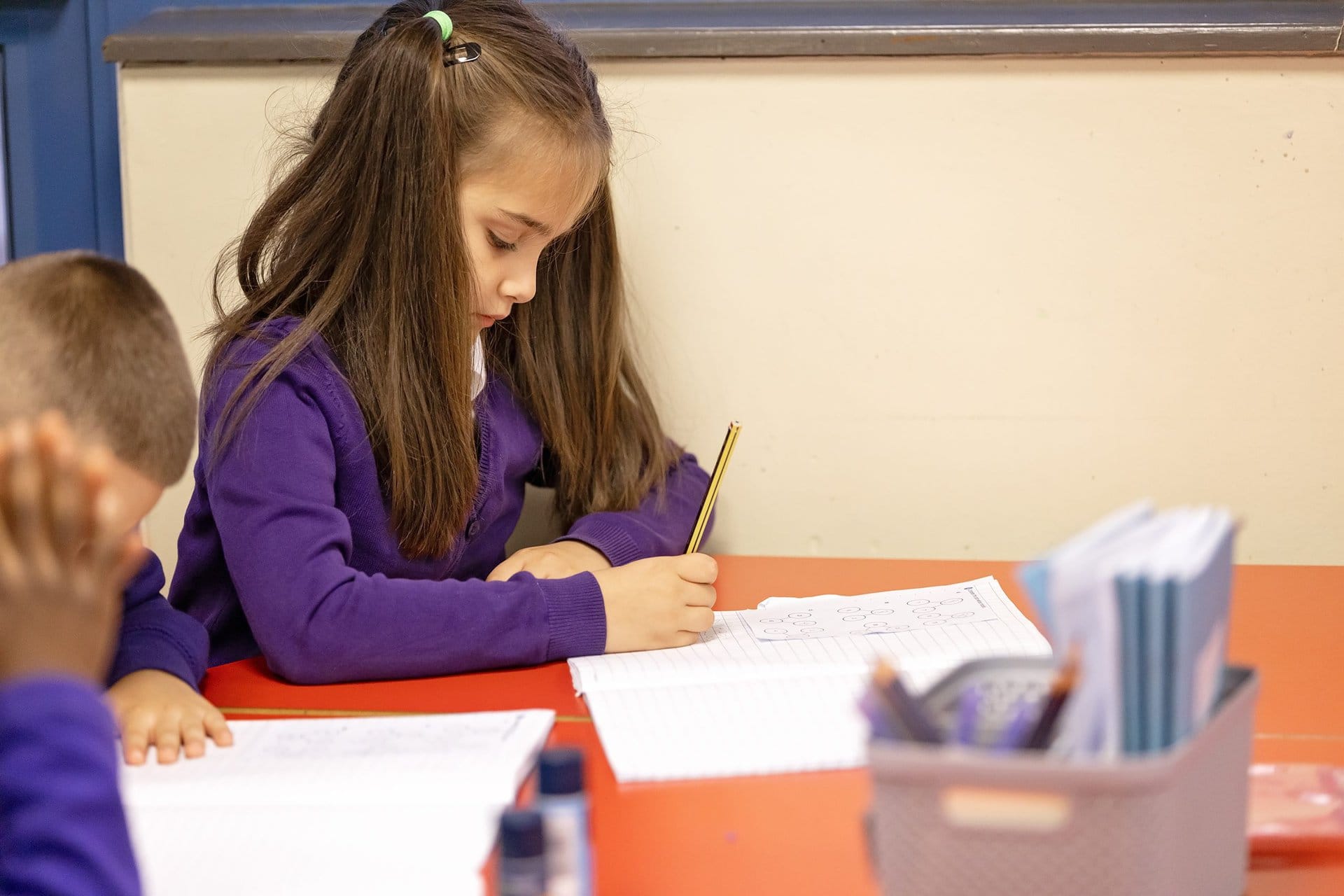
In Reception, we teach handwriting using the Kinetic Letters programme. This approach helps children develop the physical skills they need for writing in a fun, engaging, and age-appropriate way. Through a range of activities, children develop their fine and gross motor skills, helping them form letters confidently and comfortably.
The programme teaches children that handwriting is not just about making letter shapes; it is about learning how to sit correctly, hold a pencil effectively, and move their bodies in a way that supports successful writing. By establishing these strong foundations early on, children are better equipped to develop neat, fluent handwriting as they progress through school. Through daily practice and engaging activities, we help every child develop the skills they need to become successful and enthusiastic writers.

Communication and Language - WellComm
In EYFS, we support children's communication and language development through WellComm, a highly effective speech and language toolkit designed for children aged 6 months to 6 years. WellComm helps us monitor and track each child's progress, enabling us to quickly identify any areas where additional support may be needed in language, communication, or social interaction. By spotting concerns early, we can provide targeted support to help every child thrive.
The programme also offers a wide range of fun, practical, and engaging activities that staff use both within everyday classroom provision and during focused teaching sessions. These activities help children build confidence, develop their vocabulary, strengthen their communication skills, and become successful learners.

Religious Education
At Victoria we use “Jigsaw RE” to teach Religious Education (RE) from Reception through to Year Six. RE is a vitally important component of children’s personal, social and spiritual development. Developing an understanding of their own and others’ worldviews underpins the growth of empathy and respect. As well as Jigsaw RE, in Reception we plan opportunities to look at a variety of celebrations at appropriate times during the term which reflect and celebrates the diversity within our school and local community. The RE objectives cover a number of the development matters and ELG statements, ensuring a cross curricular approach to learning.

Physical Education – Get set 4 PE
At Victoria, we use “Get Set 4 PE” to provide children with fun, active, and engaging physical education lessons that support their overall development. The programme helps children develop key fundamental movement skills, such as running, jumping, balancing, throwing, catching, and coordination. These skills form the foundation for future participation in sports and physical activity, while also helping children to develop confidence in their physical abilities. Through a variety of exciting games and challenges, children learn how to work independently and with others, take turns, listen carefully, and follow instructions. The activities are carefully planned to be age-appropriate and linked to the Early Years Foundation Stage (EYFS) curriculum, ensuring that children make progress while enjoying being active.
Regular physical activity is essential for children's health and wellbeing. Get Set 4 PE encourages children to develop a positive attitude towards exercise, build resilience, and experience the joy of movement. By developing strength, balance, coordination, and spatial awareness, children are also supported in other areas of learning, including their readiness for writing, concentration, and self-confidence. Most importantly, Get Set 4 PE helps children develop a lifelong love of being active through fun, inclusive, and engaging experiences.

PSHE – Jigsaw
At Victoria, we use Jigsaw PSHE to support children’s personal, social, emotional, and wellbeing development in a fun, engaging, and age-appropriate way. Jigsaw helps children understand themselves and their feelings, build positive relationships, and develop the skills they need to thrive both in school and beyond. Through stories, discussions, games, and practical activities, children learn about topics such as friendships, kindness, resilience, healthy lifestyles, and celebrating differences.
The programme encourages children to recognise and manage their emotions, develop confidence and self-esteem, and learn how to work cooperatively with others. These important life skills help children feel happy, safe, and ready to learn. Jigsaw is carefully designed to support the Early Years Foundation Stage (EYFS) curriculum and creates opportunities for children to reflect, share their ideas, and develop a strong sense of belonging within the classroom community.
By using Jigsaw, we aim to nurture confident, caring, and respectful children who understand the importance of kindness, empathy, and positive relationships, giving them a strong foundation for future learning and life.

Useful Website Links
Subject Leader
Miss D Holmes